Come Find Me in Tucson

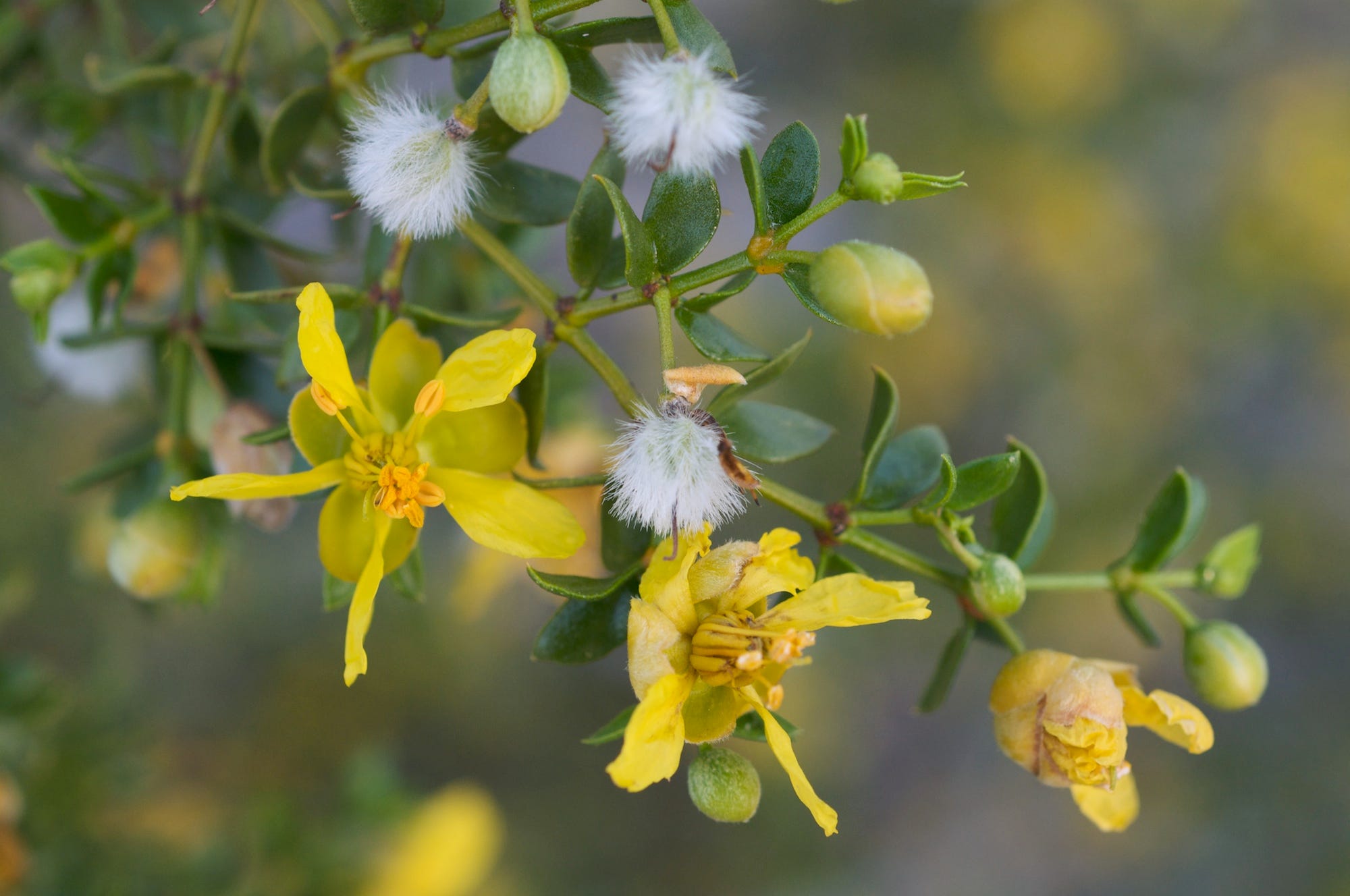
There’s a smell the Sonoran Desert gives off after rain, sharp and resinous. It comes from the creosote bush (scientific name: Larrea tridentata, Zygophyllaceae), a plant people across the Southwest have used for generations in traditional medicine for conditions ranging from colds to wounds and stomach upset. It’s a good example of something I’ve spent my career chasing: some of the most powerful chemistry on Earth is hiding in plain sight, in the plants around us!
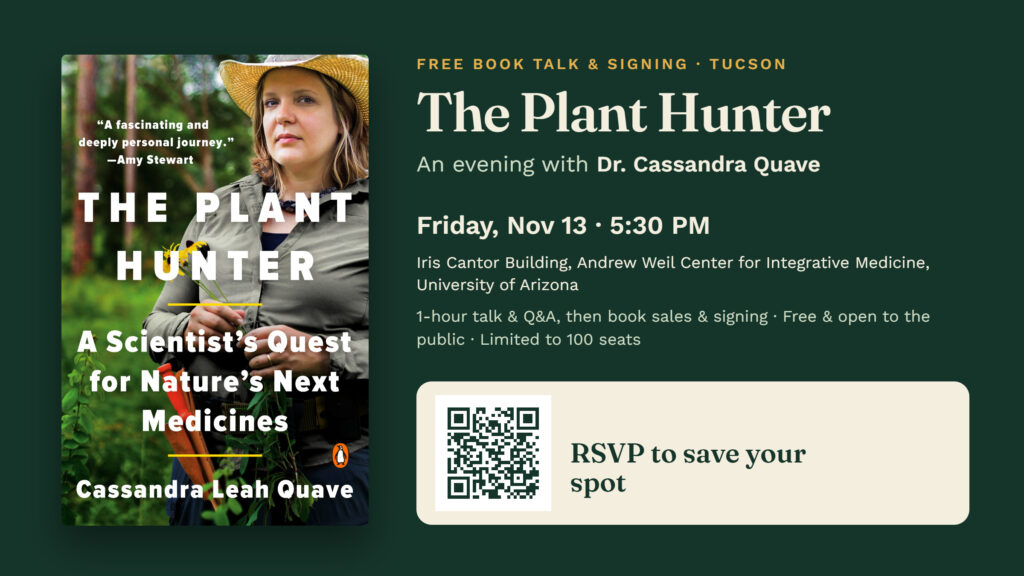
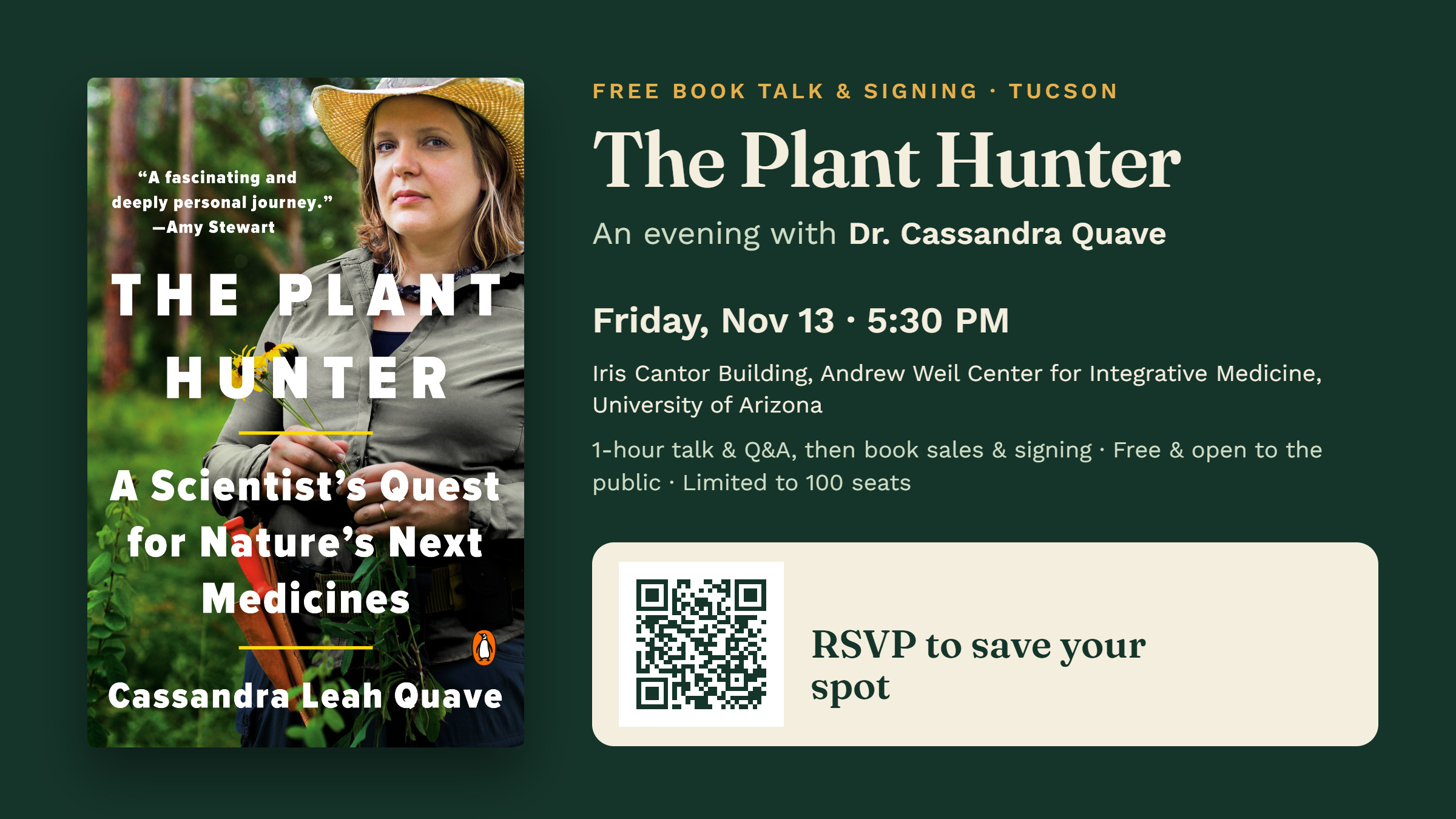
On Friday, November 13, I’m heading to Tucson to talk about that chase. I’ll be giving a free talk on my book The Plant Hunter at the University of Arizona’s Andrew Weil Center for Integrative Medicine, and I’d love for you to join me.
What the talk is about
The Plant Hunter is the story of how I came to spend my life searching plants for new medicines, often in places that are hard to reach: the flooded forests of the Amazon, remote mountain villages in the Balkans, and many places in between. The goal behind all of it is urgent. Antibiotic-resistant infections are one of the biggest threats in modern medicine, and the plants traditional healers have used for centuries may hold clues to new ways of fighting them.
I’ll share stories from the field and the lab: what it takes to collect plants responsibly, how a remedy passed down through generations becomes a lead in my lab, and what we’re learning along the way.
What to expect
The evening starts with a one-hour talk and Q&A, so bring your questions. Afterward, I’ll stay to sell and sign books and say hello.
Please note: this is an in-person event only. There is no livestream, so if you’d like to hear the talk, the room is the place to be.
Who should come
Anyone curious about plants, medicine or adventure. Students and researchers, gardeners and herbalists, native plant lovers, book clubs, and anyone who has ever wondered what’s really inside the plants around them. No science background needed.
The details
-
When: Friday, November 13, 5:30 PM
-
Where: Iris Cantor Building, Andrew Weil Center for Integrative Medicine, University of Arizona, 1502 E Mabel St, Tucson, AZ 85719
-
Cost: Free and open to the public
-
Seating: Limited to 100, so please RSVP
-
Parking: Free from 5:00 PM in Lot 2147 (1231 N Cherry Ave), directly east of the building
Signed books
I’ll bring signed hardcover copies of The Plant Hunter, but only as many as people reserve in advance as these are coming in my luggage from Atlanta, so please let me know on the RSVP form if you’d like one. Each copy is $29.16 ($27.00 plus $2.16 tax), and I’ll accept card, Venmo, PayPal or cash.
Save your seat
RSVP and reserve your books here by Thursday, November 12.
You can find full event details on my website.
Can’t make it?
If you’re not in Tucson but know someone who is, please forward this to them. That’s the best way to help fill the room. And if you’ve read The Plant Hunter already, thank you! It means the world to me.
A huge thank-you to the Andrew Weil Center for Integrative Medicine for hosting. I can’t wait to see some of you there.
Yours in health, Dr. Quave
If you believe this story deserves a wider audience, please tap the ❤️ and restack it 🔄. Every share helps!
Cassandra L. Quave, Ph.D. is a Guggenheim Fellow, CNN Champion for Change, Fellow of the National Academy of Inventors, recipient of The National Academies Award for Excellence in Science Communication, and award-winning author of The Plant Hunter. Her day job is as Professor and Herbarium Director at Emory University, where she leads a group of research scientists studying medicinal plants to find new life-saving drugs from nature. She hosts the Foodie Pharmacology podcast and writes the Nature’s Pharmacy newsletter to share the science behind natural medicines. To support her effort, consider a paid or founding subscription to Nature’s Pharmacy or donation to her lab research.


Responses